What’s for dinner?
Context
“What’s for dinner tonight?” is the question Albert Heijn’s customers ask most, every single day. For the past five years I’ve worked on answering it: designing how Albert Heijn inspires customers to cook, from the first spark of an idea to the moment they’re standing in their kitchen.
I combine customer research, data and continuous experimentation to make our inspiration more relevant, more personal and more useful in everyday life.
All of this ties into Albert Heijn’s mission: making better food accessible to everyone. It’s a mission I feel strongly about. Helping people cook a good meal on an ordinary weekday, without extra effort or cost, is where I believe that mission becomes real.
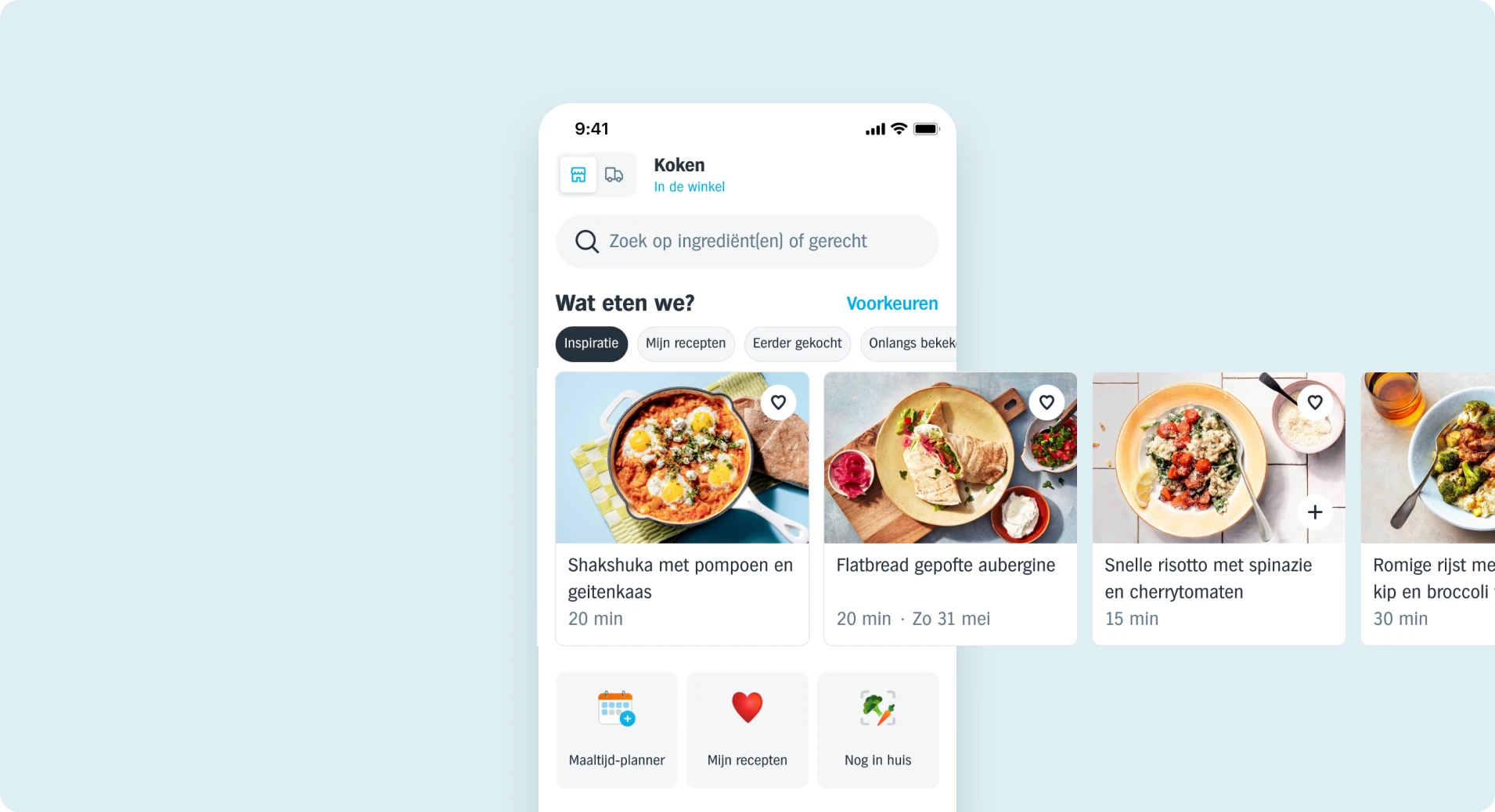
Deciding what to cook sounds simple, but it’s a daily decision shaped by time, budget, taste, household and what’s already in the fridge. Many customers feel it as a small but recurring burden.
For Albert Heijn, that moment matters. Helping customers decide what to eat makes their lives easier, builds a stronger relationship with our brand, and naturally leads to the products they need. Getting inspiration right is good for customers and good for business.
Making inspiration relevant
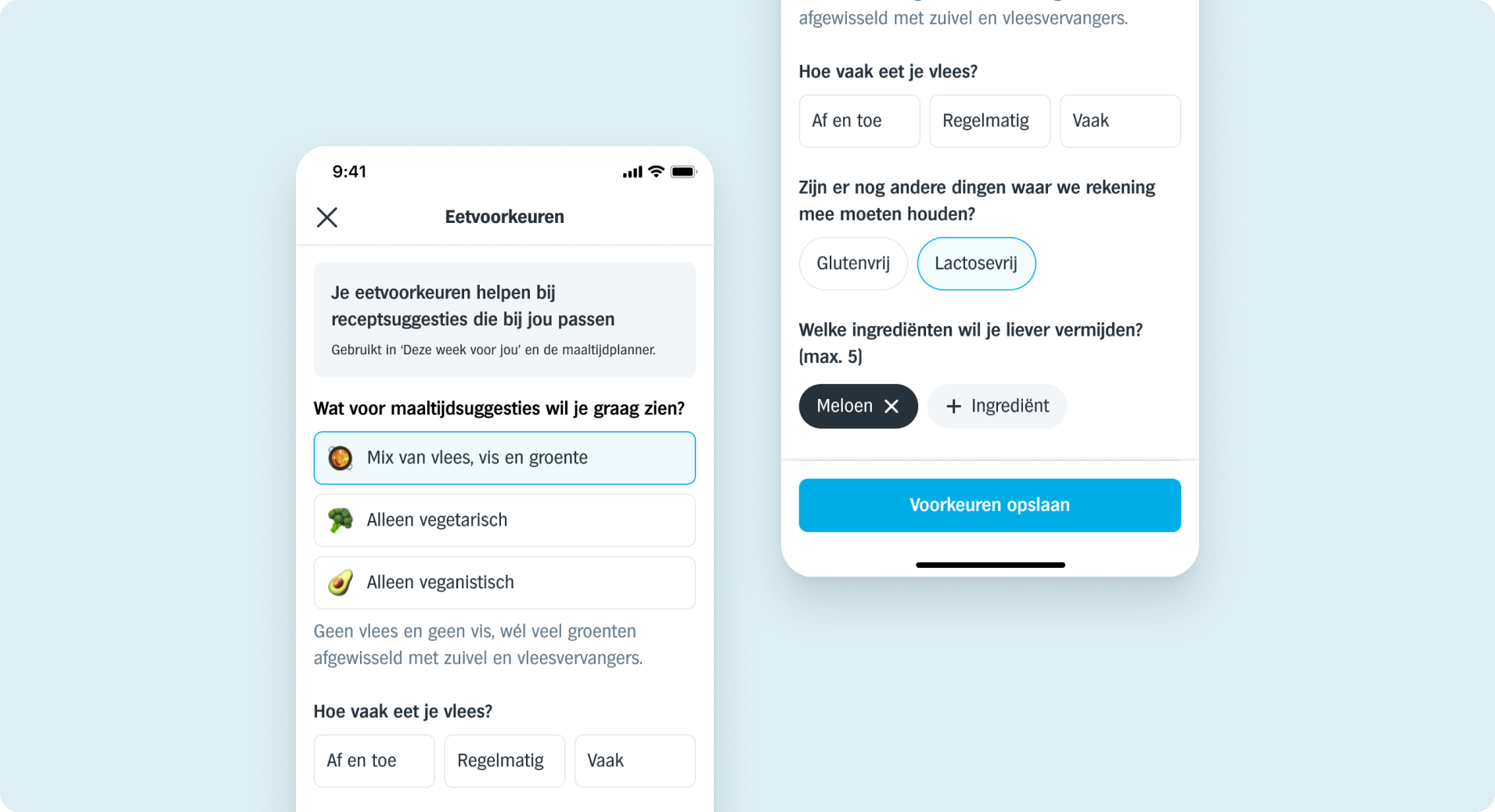
With thousands of recipes available, the challenge isn’t having enough content, it’s showing the right content. We approach relevance from two sides:
- The customer in control. We ask customers about their preferences, such as diets, allergies and household size, and let them adjust these at any time. Customers decide what we know about them and how it shapes what they see.
- Recommenders that learn. Alongside explicit preferences, recommendation models use customer behaviour to surface recipes that fit. I design how these recommendations appear, so they feel helpful rather than random, and stay understandable.
The combination matters: stated preferences give customers control, while recommenders pick up on what they actually do.
Shifting to data-driven design
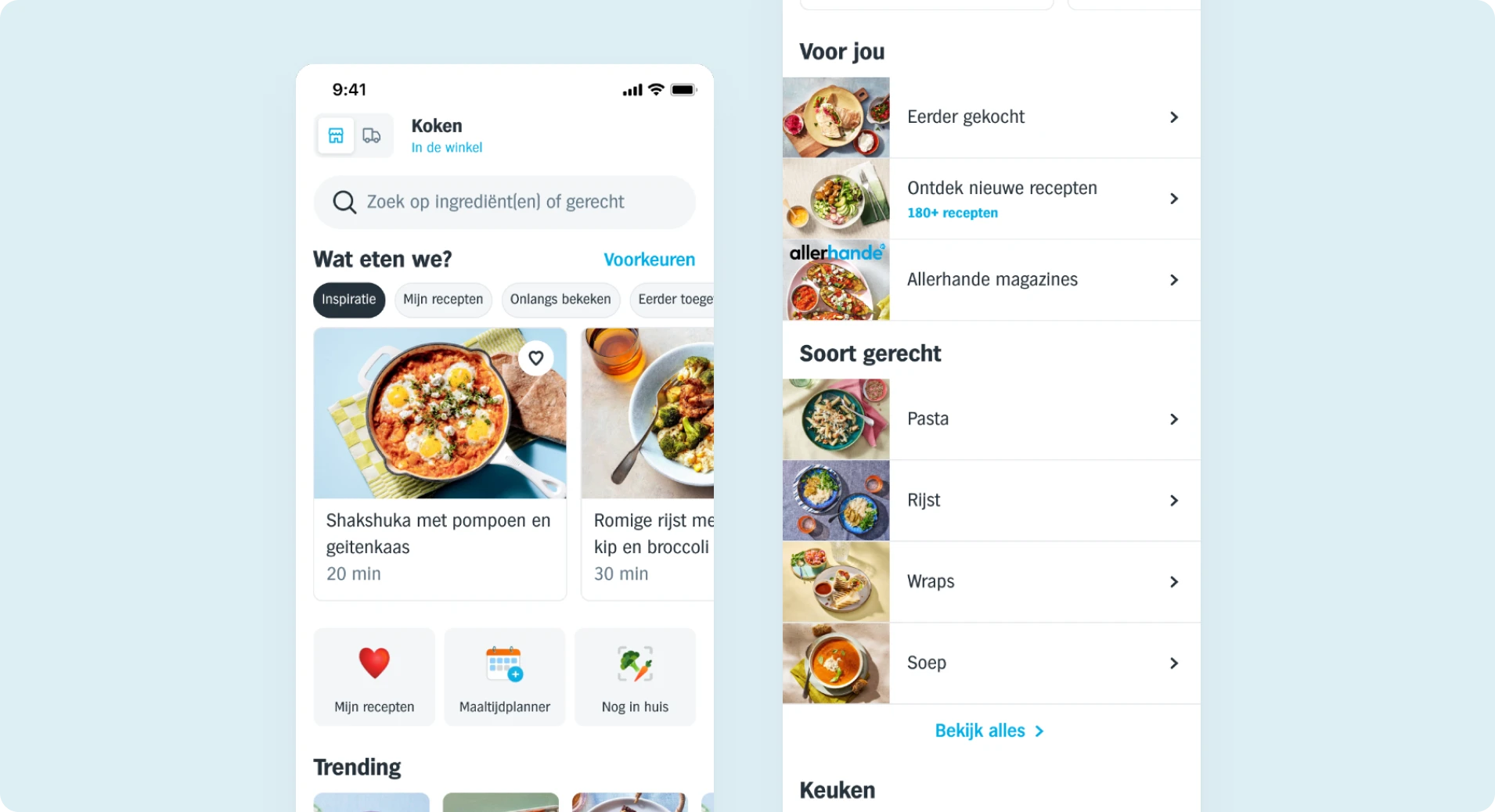
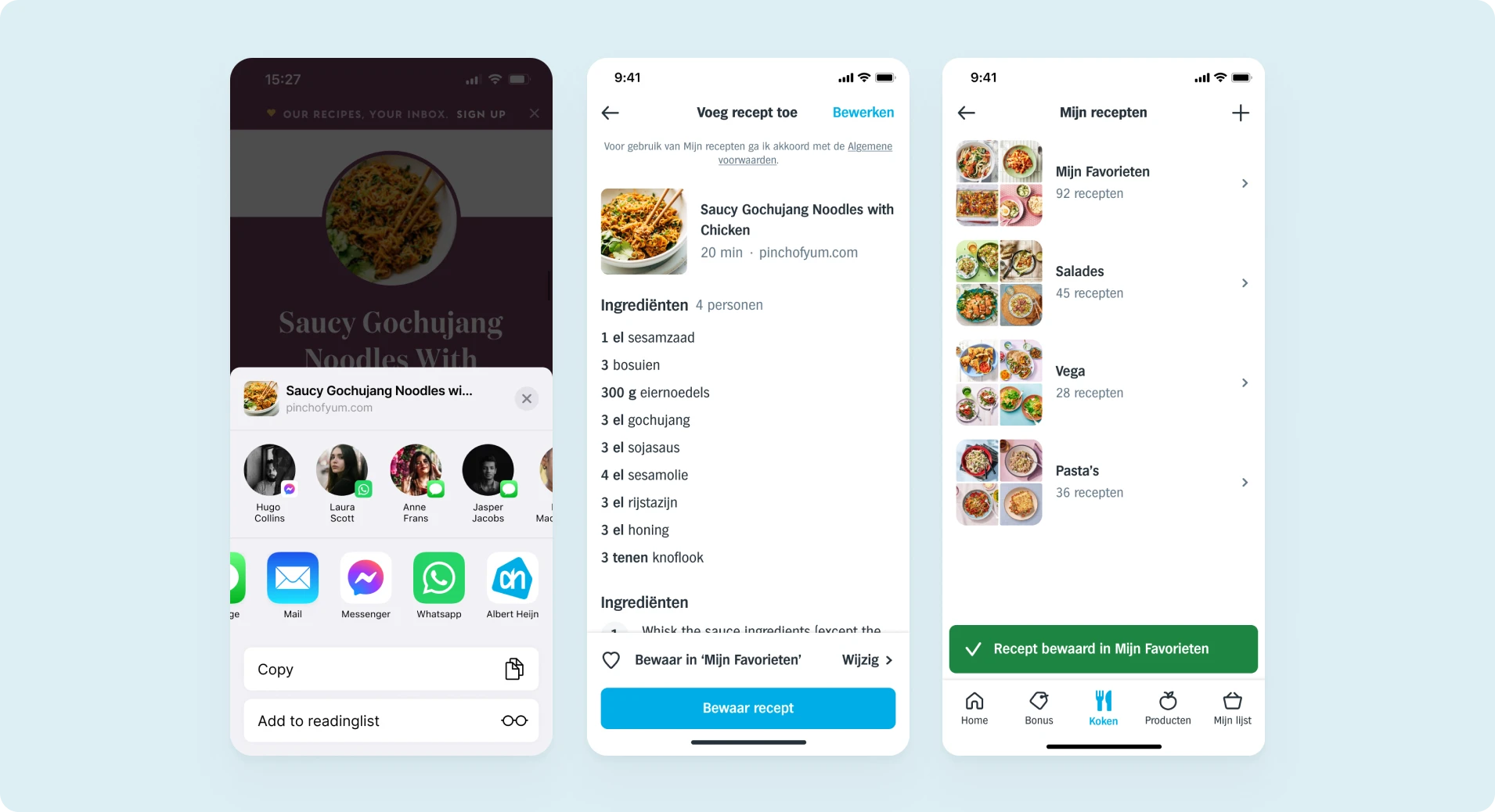
Over the past year, our team has been moving towards a more data-driven way of working, and I’ve been closely involved in making that shift. Together with our product owner and the data analytics team, we measure, translate data into design questions, and use the outcomes to set priorities. One clear example: the data showed that customers rely heavily on My Recipes, their personal collection of saved recipes. It’s where inspiration turns into habit. Based on that insight, we’re making My Recipes more prominent and easier to reach, instead of only pushing new content.
Albert Heijn’s recipes have their roots in Allerhande, a much-loved print magazine full of seasonal themes, beautiful photography and culinary recipes. That editorial richness is a strength. But on a Tuesday at 17:00, most customers aren’t looking for a story; they want a quick, reliable answer.
Part of my work is finding the balance between the two: keeping the inspiring, editorial character of Allerhande while designing for the practical, day-to-day question customers actually have. We get there by testing, learning and iterating, rather than assuming which approach works best.
From recipe to groceries
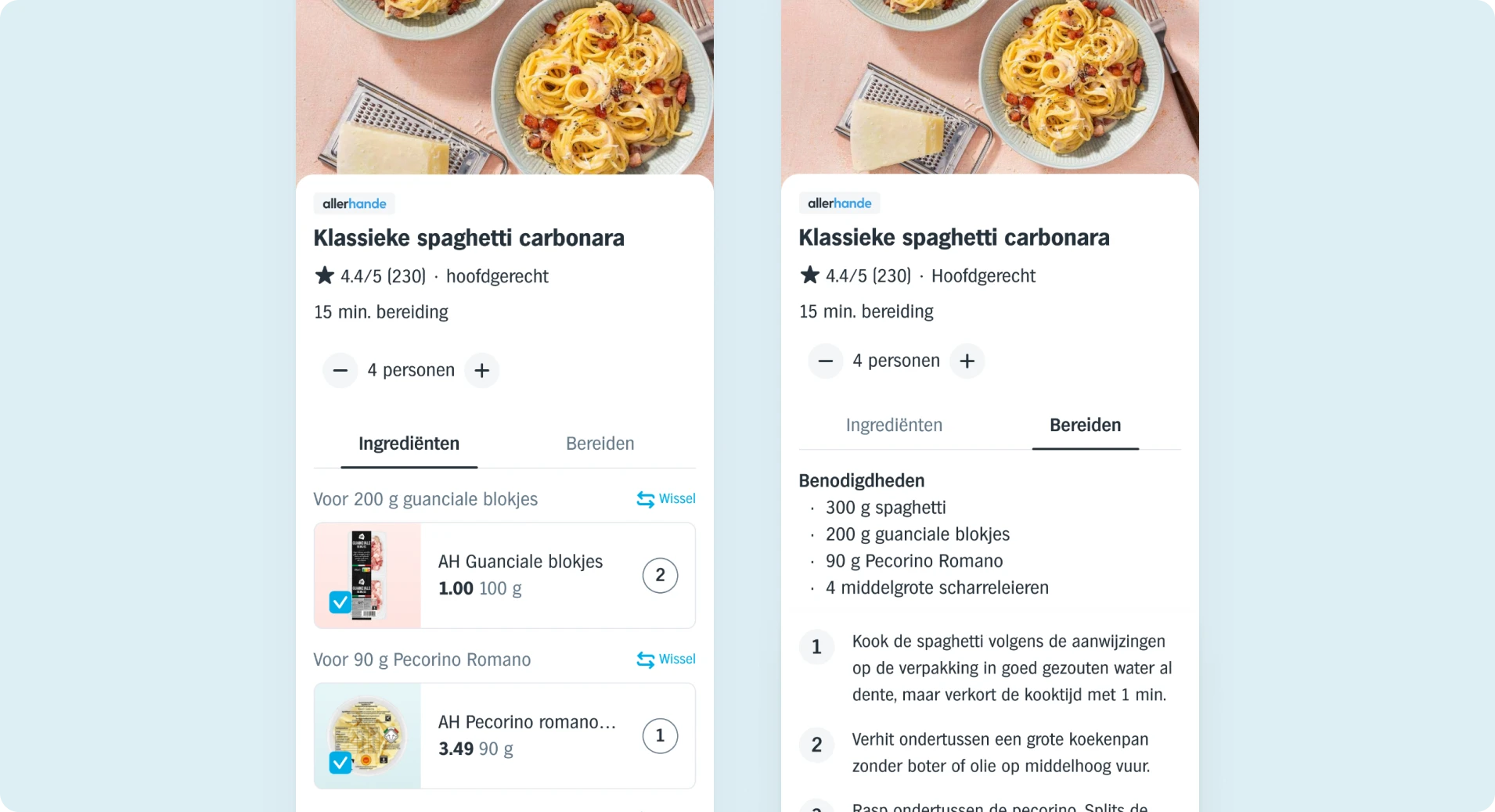
The recipe detail page is where the decision is made. It’s the page with the highest conversion in the cooking domain: where customers decide to cook a recipe, add ingredients to their basket and save it for later.
Because so much happens here, we test it continuously and in different ways:
- Customer interviews to understand what people need when choosing a recipe.
- Kitchen tests where we watch customers actually cook with the page, revealing problems you’d never find behind a desk.
- A/B tests to validate changes at scale. I lead or am closely involved in these experiments, from hypothesis to analysis.
My role
Five years on one question has taught me that there’s no single answer to “what’s for dinner?”. The right answer depends on the customer, the day and the moment, which is exactly why relevance, testing and a broad view of the journey matter so much.
It has also shaped how I work: starting from real customer behaviour, validating ideas with data, and always balancing what we want to tell customers with what they actually need. This foundation is also what made the next step possible: Steijn, our AI assistant, which takes the same question into conversation.